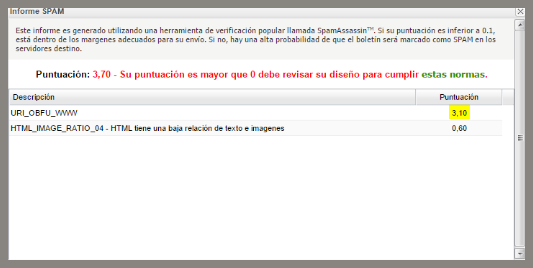
The obfuscation of an URL is a method used by criminals to practice phishing, so that scammers can hide a fake URL in a link with a text that points to another URL. For example:
Click here to update your account
www.paypal.com
And when he clicks, the user is directed to a URL like this:
http://127.1.1.1/new-scam.php
The problem is that often, many legitimate email marketing campaigns are affected by this practice, as it is something that the spam filters will not tolerate, due to the fact that it is considered phishing.
This usually occurs when the layout was changed and the link text (URL) does not match the actual URL.
For example, let’s imagine we added this paragraph on our newsletter:
See our previous newsletters
www.mycompany.com/newsletter-may.com
And next month we will change only the text:
See our previous newsletters
www.mycompany.com/newsletter-june.com
But forgetting to change the link, which continues to point to the old URL, if you do that, the system can identify that the user is trying to hide the URL (it is an Obfuscated URL).
This can also occur when copying old texts with tracking links, in these cases the link will not match.
Just correct the links and update the texts to avoid it, as this can be terrible for your sender score reputation.