I recently read an article on Puromarketing that talked about companies that exaggerate when using email marketing, the article explained that these companies would eventually become invisible, personally, I don’t agree 100% with this idea, but I agree with a phrase that appears in this article:
In fact, the third reason with the highest percentage (26% among users interviewed by Kentico) is precisely that the email had nothing interesting to offer to users.
I believe the only reason that affects and induce subscribers to opt-out is undoubtedly the quality of content sent, not the frequency of emails. At the end of the day, would your subscribers get tired of receiving interesting and useful emails sent by you? Obviously most users will not be happy if they are always receiving sales promotion of products, articles, travel packages and other commercial emails, as there is a limit of money all of us can spend.
Companies like:
– Groupon
– Groupalia
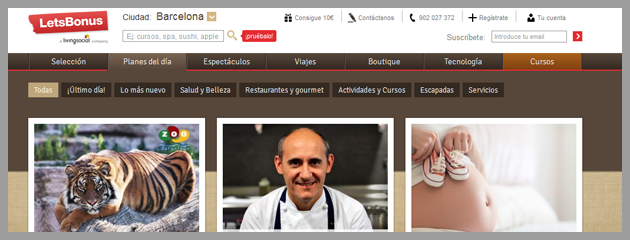
– Letsbonus
Send a daily email with the latest offers and news. Even though you may think it is a lot of emails, these companies need to send this number of messages due to their line of business, as due to the type of products and promotions they work with, these companies have to send at least a daily email to try to get as many sales as possible. In this case, what is clear is that users already know they will get an email a day, and the variety of content and products offered play a very important role. It is important to take into account that many users will want to see this newsletter only for curiosity to see the new products, even if they actually don’t want to buy anything.
But this is just an example, another example would be The campaign to raise funds for the campaign of the president Obama, during this campaign, a large number of messages was sent, but most subscribers didn’t opt-out, even if on more than one occasion the content sent was of poor quality or offered no novelty. Are you wondering how can someone “harass” subscribers that way?
The answer to this question is very simple, these people actually want to receive these emails, therefore, as they want to receive these messages, these users will not opt-out from the mailing, regardless of the number of messages sent.
Does it mean you can do the same and send daily newsletters?
Frankly, I don’t recommend it because it is very unlikely that products or normal causes will achieve these levels of tolerance. It’s just an example to illustrate that the problem is not the frequency itself without any further analysis, but a set of variables such as quality of content, interaction of the subscribers with your brand or products, or other factors.
A different example
We can see an example in The New Inbox, in this book the author outlines the following situation, for seven days he received the same newsletter, with only the subject being changed:
– A $100 Gift Certificate to Shop Our Fall Collection.
– Save $100 on Every $500 You Spend. Limited time.
– Save $100 on Every $500 You Spend. Includes Sale.
– Save $100 on Every $500 You Spend. In Store and Online.
– Save $100 on Every $500 You Spend. Only 2 days left.
– Last Day to Save $100 on Every $500 You Spend.
– Extended 1 day Only: Save $100 on Every $500 You Spend
That is simply too much, every day for seven days receiving the same email, with a slightly different subject, will be too much for any one. A different strategy would be acceptable, for instance if the company had sent the first email, the message that there are only two days left, or even just one day. This strategy would have been less damaging for the mailing list and the campaign, and the newsletter would have a better open rate with the first email, and the second for those who didn’t read the first message, or even to try to convince users who opted to open the first newsletter.
A number of newsletters as the above example may be too much for your subscribers, don’t think that because they have opted to receive your newsletters your users are willing to receive every email you send, things don’t work that way.
It is important to understand that whenever you send a newsletter
You need to offer something that is of interest to your subscribers, because, as explained above, the problem is not the frequency of emails, but rather the content you are sending.
Remember that your subscribers will not bear to receive newsletters that are not interesting to them or have nothing to offer, in terms of content.
Try to understand the concept this way:
– Each user can bear to receive only a number of emails that are not as interesting as the user wants, after that, if that user receive just one email of poor quality, that could be the straw that breaks the camel’s back.
Whenever you send something to your list and they don’t like it, your users will be one step closer to the moment in which they will think, that is too much and will unsubscribe from your mailing. Each subscribers is different, and will support more or less depending on how engaged the user is with your brand or products. Subscribers that are really engaged on a particular cause as those who received the messages for the campaign of Obama simply cannot be the rule, it is almost impossible to have subscribers so engaged, therefore, before you send a newsletter, think carefully, will the campaign bring something of value or new to your contacts?
Follow the example of Zappos.com
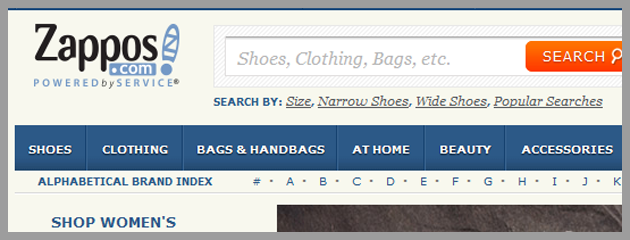
Before sending the Christmas campaign, as they had planned to send a larger volume of emails than usual, they decided to notify the subscribers before the first newsletter, and sent an email to explain the new frequency, with important information, such as the start date of the campaign, as well as how long it would last.
This email offered the option to unsubscribe temporarily during this period, to resume the subscription with the normal frequency after the end of the campaign.
These users could receive a single email during the duration of the campaign.
The most important part of this strategy is, perhaps, the warning itself, as the company explained that this would not be a permanent policy and the reason for the increased amount of messages. This transparency is vital so that all subscribers know what is happening. As you can see, a email marketing campaign requires planning, it is necessary to take into account all possibilities. The most important factor is to remember that when a subscriber receives an email marketing campaign, if you are not doing things correctly, you could end up losing this contact.
In summary
In the end it will depend on your product and your mailing, you should not create a new strategy based only on empty statistics and understand which strategy may be better in your case. What is the value of trusting a statistic that says you must send a weekly newsletter, if you actually can create useful content to send a campaign once a month?
Certainly these articles are useful to help you think and understand your case in particular, however you should not use this information as a rule that must be blindly followed because your target audience, your subscribers could be totally different when compared with the users who were a part of the study.
In your case, what is the frequency you prefer when sending your email marketing campaigns?
Remember that Mailrelay is one of the best email marketing platforms, with tools that will allow your campaigns to get in the inbox of your subscribers. Create your free email marketing account now!